Vacation Rental Investment in New Orleans: What to Know Before You Buy
A step-by-step guide for future owners on permits, property condition, and running a rental before you make an offer.

A smart vacation rental investment in New Orleans starts with the permit, not the house. Before you buy, confirm that the address can legally operate as a short-term rental. Then check the home's condition, flood risk, and insurance. Last, plan who will run it day to day.
Many buyers do these steps in the opposite order. They fall in love with a home, close on it, and only then learn it can't be rented the way they planned. This guide walks through each step in the right order. It is written for buyers of higher-end homes, including out-of-town owners who won't live here full time.
Is Airbnb Profitable in New Orleans?
It can be, but there is no simple yes. Whether a short-term rental makes money here depends on four things: whether the home can get a permit, where it sits, what kind of property it is, and how well it is managed.
New Orleans is a strong travel city. Mardi Gras, Jazz Fest, Saints games, and year-round food and music bring guests in every season. But demand alone does not make a good investment. A beautiful home in a busy neighborhood earns nothing as a short-term rental if the city won't license it.
Step 1 of Your Vacation Rental Investment: Check the Rules First
This is the most important step in any vacation rental investment in New Orleans. The city's rules are strict, they change often, and they are enforced.
What Counts as a Short-Term Rental?
The city defines a short-term rental as renting a home, or part of one, for less than 30 days in a row. That use needs a city license. Booking sites now check for a valid permit, and listings without one can be removed. Our guide to why New Orleans Airbnb listings get delisted explains how that works.
The Two Main License Types
Most homes fall under one of two owner license types.
A Non-Commercial Short-Term Rental (NSTR) license is for homes in residential areas. Based on the city's current training materials, only one NSTR or bed and breakfast is allowed per city square. When more than one person applies on the same square, the city holds a lottery. If a square already has a license, other homes on it can't enter. The license also requires an operator who lives at the property during every guest stay, and it caps the rental at three bedrooms and six guests.
A Commercial Short-Term Rental (CSTR) license is for certain commercial and mixed-use zoning districts. It goes through a longer zoning review and approval process with the City Planning Commission.
These rules matter a lot for out-of-town buyers. If you won't live in the home, a residential NSTR may not work for you unless someone else lives on site as the operator. Always confirm the current rules with the city before you make an offer.
Quick Checks You Can Do Before You Buy
You don't need to be an expert to rule a property in or out. A few simple checks can save you from a costly mistake:
- Look up the zoning for the exact address.
- Find out whether a short-term rental license already exists on that square.
- Confirm which license type the home would need, and whether that type is open to new applicants.
- Remember that licenses don't transfer. If the seller has a license, you will need your own.
- Ask about any open code violations on the property.
The City of New Orleans Short Term Rental Administration posts license types, lottery dates, and an address lookup tool for zoning. Start there, and speak with a local real estate attorney before you commit.
Step 2: Evaluate the Property Itself
Once you know a home can be licensed, look closely at the building. In New Orleans, the house itself can be the biggest cost after the purchase.
Historic Homes Need Extra Care
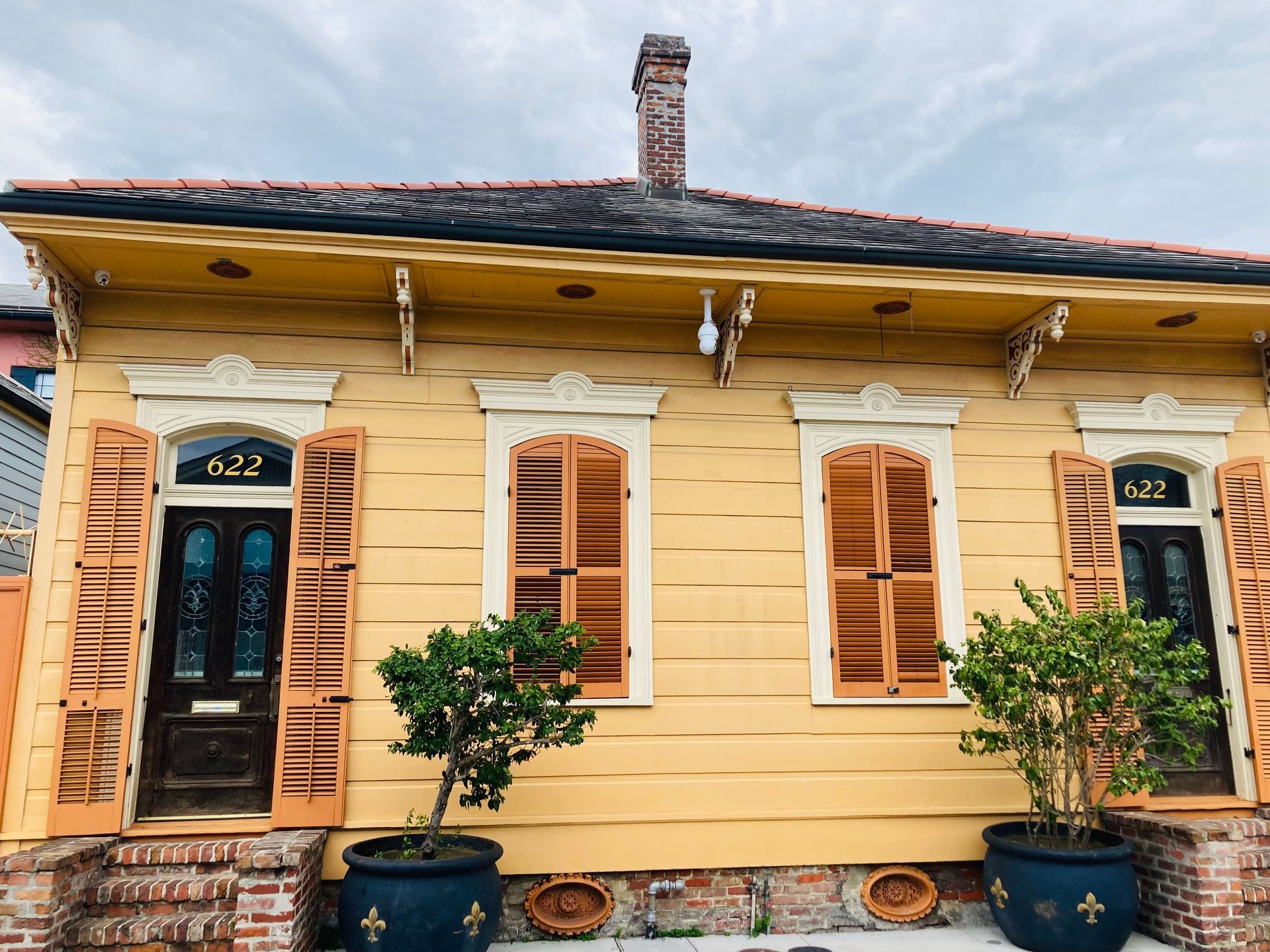
Many of the most appealing rentals are historic shotgun homes, Creole cottages, and raised center-hall houses. Guests love the tall ceilings, heart pine floors, and original details. Those same features need more upkeep than newer homes.
If the home sits in a local historic district, exterior work usually needs approval first. The city says homes in local historic districts need a Certificate of Appropriateness for exterior work, from repairs to fencing. Build that extra time into any renovation plan.
Flood Zone and Insurance
Check the flood risk for the exact address before you buy. The FEMA Flood Map Service Center lets you search any address to see its flood zone.
Insurance is just as important. Ask an agent to quote the home as a short-term rental, not as a regular home. Coverage for wind, flood, and guest liability can look very different once a home is rented to travelers. Get real quotes before you set your budget.
Plan a Real Maintenance Budget
Humidity, heavy rain, termites, and hurricane season are part of life here. HVAC systems work hard most of the year. Roofs, gutters, and wood need regular attention. A rental also sees far more wear than a home with one family in it. Plan for steady upkeep, not just surprise repairs.
Step 3: Plan How the Home Will Run
Many new owners think a short-term rental is a money printer. Buy the house, list it, and the bookings roll in. In our experience, that belief is one of the biggest mistakes a new owner can make.
Running a rental takes real work, especially for someone with little or no experience. You need reliable cleaners who can turn the home over between guests. You need to know which furniture, linens, and amenities to buy. You need to understand what guests expect from a higher-end home, and then deliver it every single stay.
The first few months matter most. A new listing has few reviews, so each one carries a lot of weight. Even a few negative reviews at the start can badly hurt a listing that would otherwise do well.
Think about amenities early, too. In the homes we manage, pools are one of the most sought-after features guests look for. If a home already has a pool, that can be a real advantage. If it doesn't, adding one later may be worth studying as a long-term upgrade. Either way, plan for the upkeep a pool needs.
This is where professional management helps. Metis NOLA is an Airbnb Superhost and a VRBO Premier Host, and our team brings more than 20 years of combined management experience. We handle the cleaning teams, maintenance, guest care, and listing details for the homes we manage, working to maximize profitability while protecting each home. You can learn more about our approach on our List With Us page.
What Are the Best Neighborhoods for Airbnb in New Orleans?
Guests often ask to stay near the French Quarter, the Marigny, the Bywater, the Garden District, Uptown, and Mid-City. These areas are close to food, music, parades, and the streetcar.
But for an investor, the best neighborhood is one where your home can actually be licensed. Rules can change from one block to the next, even inside popular areas. For example, the city's training materials list an area bounded by St. Charles Avenue, Jackson Avenue, Magazine Street, and Louisiana Avenue where short-term rentals are not allowed.
So start with the address, not the neighborhood name. Check zoning and license status first. Then look at guest demand.
FAQ
Is a vacation rental investment in New Orleans a good idea?
It can be for the right property. Success depends on permit eligibility, location, the condition of the home, and strong management. There is no guaranteed return, so do your research before you buy.
Can I run a short-term rental in New Orleans if I don't live there?
It depends on the license type. Residential NSTR licenses require an operator who lives at the property during guest stays. Commercial licenses are limited to certain zoning districts and need city approval. Check current rules with the city first.
Can I use the seller's short-term rental license after I buy?
No. The city says short-term rental licenses can't be transferred. A new owner needs to apply for their own license.
What should I check first before buying an Airbnb in New Orleans?
Check the zoning and license options for the exact address. Then check flood risk, insurance costs, and the condition of the home. These steps can rule a property out before you spend money on it.
Making Your Vacation Rental Investment Work
A good vacation rental investment in New Orleans comes down to doing things in the right order. Confirm the permit path first. Then check the home, the flood risk, and the insurance. Then plan how the home will be run, because guest experience drives reviews, and reviews drive bookings.
If you are buying a home and want to understand what professional management looks like, learn more about our team. When you are ready to talk about a specific property, book a Free Property Consultation with Metis NOLA. We'll walk you through how we would care for your home and guests.
OWNER INSIGHTS